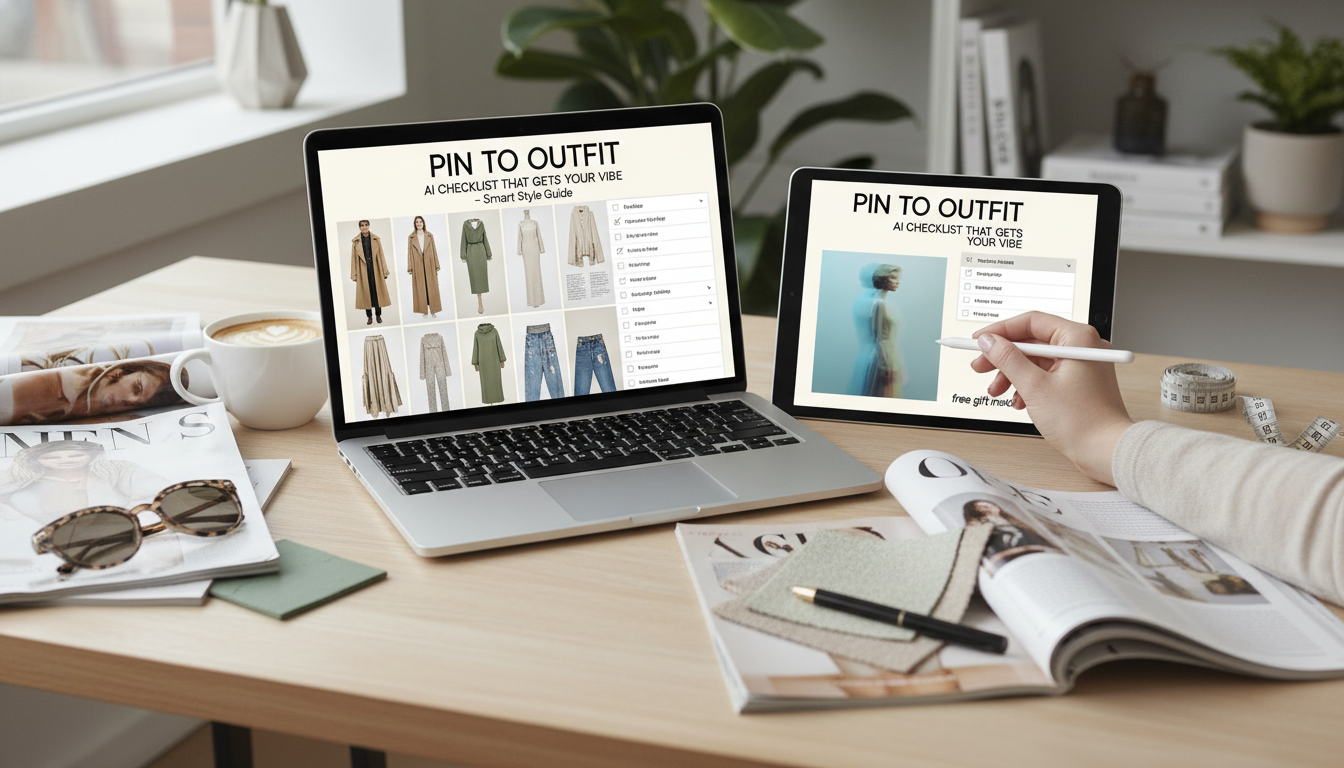
Pinterest makes it easy to collect a vibe—and surprisingly hard to turn that vibe into outfits that work for real life. A board can be full of perfect lighting, model proportions, and “one cool piece” styling… then you open your closet and nothing clicks. The fix isn’t buying random look-alikes. It’s translating what you’ve pinned into clear, repeatable style cues you can actually wear on a Tuesday. For more guidance, see Pinterest’s AI will help you find the ‘right words’ to search for fashion.
A digital checklist helps you pull patterns from your pins (silhouettes, color stories, textures, and finishing details) and turn them into outfit formulas you can repeat with pieces you already own. If you want a guided way to do it, the Pin to Outfit AI Checklist That Gets Your Vibe – Digital Checklist Download walks you through the whole translation—from board to “this top + that bottom + these shoes” clarity. For further reading, see Supercharge your Pinterest board with AI and find your personal ….
Pinterest itself is designed to help people discover and save ideas at scale (you can see more about how the platform frames discovery in the Pinterest Newsroom). The checklist approach flips discovery into decision-making: what to wear, what to buy, and what to skip.
Think of your pins like a sample size. The more consistent the input, the easier it is to spot your repeats (and the less likely you are to end up with a “style identity crisis” closet).
This is the fastest way to stop buying “cute items” that don’t build outfits. When silhouettes repeat, outfits get easier—and shopping gets more selective.
Color is emotional and practical: it sets mood and determines how mix-and-match your closet becomes. If you’re curious about why color choices influence perception and cohesion, research summaries like the overview areas in SAGE Journals (including work on color psychology in branding/marketing) provide helpful context you can apply to personal style.
| What shows up in your pins | What it means | What to ask AI for |
|---|---|---|
| Long coats, blazers, trenches | Structured layering is part of your identity | 3 outerwear-led outfit formulas using your palette |
| Monochrome or tight color stories | You like cohesion more than contrast | A 10-piece capsule palette and matching outfit grid |
| Wide-leg trousers or straight denim | You prefer relaxed structure | Outfits built around wide-leg bottoms with balanced tops |
| Gold jewelry, minimal bags, clean shoes | Polished finishing touches matter | Accessory rules (jewelry scale, bag shapes, shoe styles) |
| Soft knits, drape, muted colors | Comfort-forward, gentle lines | Cozy-chic formulas with texture pairings and layering tips |
If your pins consistently show sleek, minimal outfits, a clean everyday bag can do a lot of heavy lifting. A structured, neutral option like the Tommy Hilfiger Men’s Black Handbag with Shoulder Strap can fit into multiple outfit formulas—especially if your board repeats “black accessories + simple lines + polished shoes” as a finishing rule.
If you want a structured, repeatable process (instead of starting from scratch every time you save new pins), the Pin to Outfit AI Checklist That Gets Your Vibe – Digital Checklist Download is built for exactly that: turning “pretty” into practical, wearable direction.
About 20–40 outfit-focused pins is a practical range. The more consistent the pins (similar silhouettes, palette, and styling), the clearer your patterns become; if your board is mixed, split it into smaller vibe boards and evaluate each separately.
No—any mainstream AI chat tool can work if you provide clear constraints from your checklist (silhouettes, colors, fabrics, and “must-have” details). Paid tools can add convenience features, but they aren’t required to get useful outfit formulas.
Yes: cluster your pins into micro-vibes (like work, weekend, dressy, sporty), run the checklist per cluster, and then choose one primary lane. Keep the other lanes as accents so you get variety without losing cohesion.


Leave a comment