
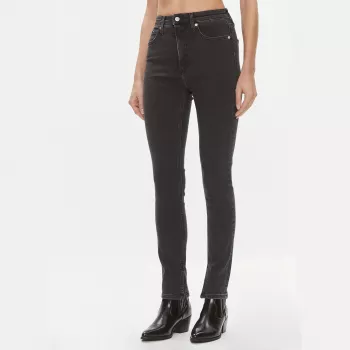
Slim fit jeans tend to suit a wide range of body types because they follow the line of the leg without clinging as tightly as skinny jeans. The most universally flattering matches are lean-to-average builds, athletic frames, and straight or slightly curvy shapes—especially when the jeans are the right rise and have a small amount of stretch.
If you have a slimmer frame, slim fit jeans create definition through the thigh and calf without looking baggy. A mid-rise usually keeps the proportions balanced, while a little stretch helps the denim sit smoothly without excess fabric at the knee or ankle.
For athletic body types—especially people with fuller thighs—slim fit jeans can look sharp as long as the cut leaves enough room in the upper leg. Look for pairs labeled “slim” rather than “super slim,” and prioritize stretch denim so the seat and thighs aren’t pulled tight. If the thigh feels restrictive, sizing up and relying on a belt can maintain a clean line while improving comfort.
Slim fit can work well on curvier bodies when the waist-to-hip ratio is accommodated. A higher rise often helps prevent waist gaping, and stretch content is key for comfort and a smooth fit through the hips. Consider styles that are slim through the leg but not aggressively tapered at the ankle to avoid emphasizing tightness in one area.
If weight is carried more in the midsection, slim fit jeans can still be flattering—pair them with a mid- to high-rise and a structured top layer (like an overshirt or jacket) to create a streamlined silhouette. Avoid very low-rise options, which can cut into the waist and disrupt proportions.
For sizing specifics and outfit ideas—especially if you’re comparing fits in darker washes—see the full guide here: Calvin Klein black slim fit jeans sizing & styling guide.
Slim fit jeans follow the leg closely but leave a bit more room in the thigh, knee, and ankle. Skinny jeans are tighter throughout and usually have a narrower leg opening.





Leave a comment