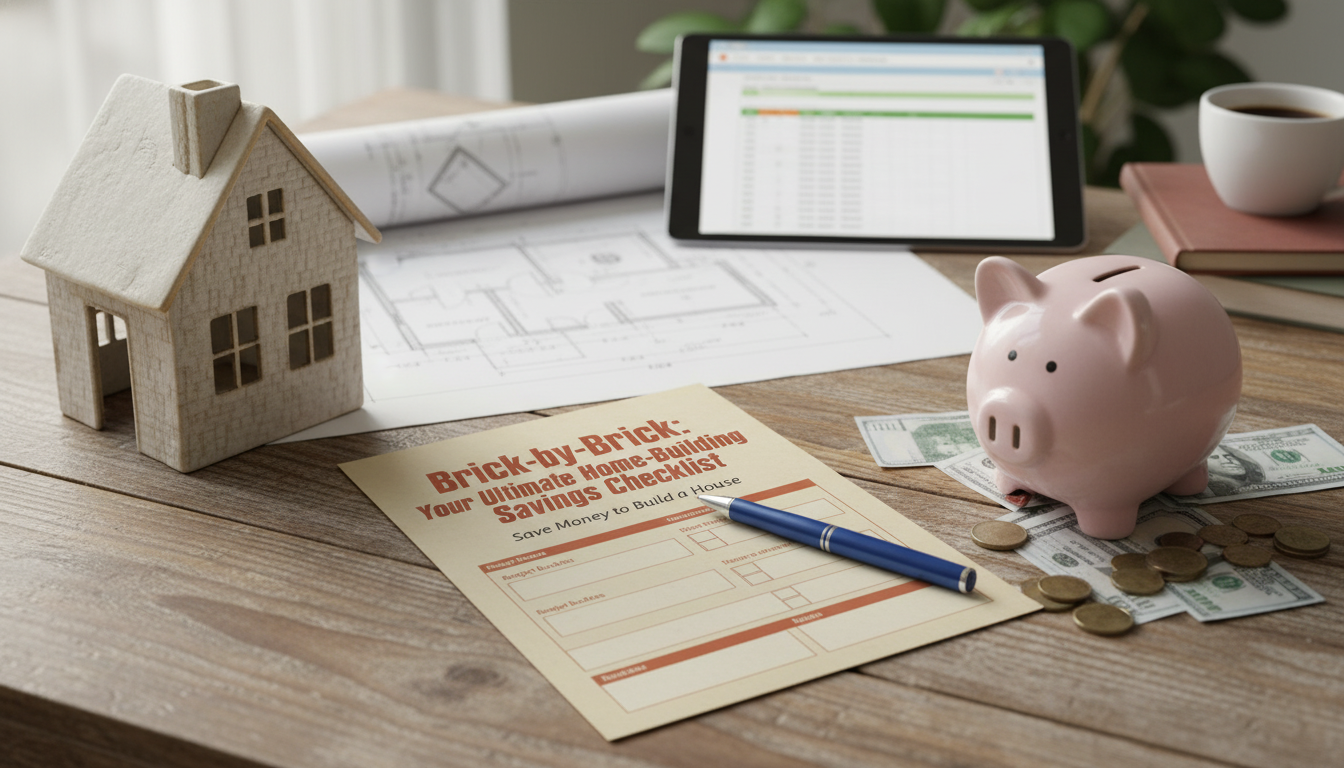
Building a house is a long sequence of decisions that can quietly add thousands to the final total. A clear savings checklist keeps the plan realistic by organizing costs, timing deposits, and tracking “one-time” expenses that tend to surprise first-time builders. Use the structure below to map the full build journey, set a monthly savings target, and keep every quote, upgrade, and contingency in one place.
If you want a ready-to-use format, a printable tool like Brick-by-Brick: Your Ultimate Home-Building Savings Checklist (Printable Financial Planning Tool) can help centralize categories, allowances, deposits, and weekly updates without juggling multiple spreadsheets.
| Category | Examples to list in the checklist | Notes to avoid surprises |
|---|---|---|
| Land & prep | Survey, soil test, clearing, grading | Plan for drainage and access early |
| Permits & pros | Architect, engineering, permits, inspections | Fees vary widely by location |
| Utilities | Water/sewer tap, well/septic, electric run, gas | Long utility runs can swing costs significantly |
| Structure | Foundation, framing, roof, windows/doors | Complex shapes increase labor and waste |
| Mechanical | Plumbing, electrical, HVAC | Panel upgrades and ductwork changes add up |
| Finishes | Cabinets, counters, flooring, fixtures | Set a finish allowance per room |
| Contingency | Unexpected site conditions, price increases | Keep separate and only use when necessary |
For mortgage and construction-loan basics, the Consumer Financial Protection Bureau (CFPB) is a reliable place to review terms, payment structures, and what to ask lenders before committing.
It also helps to sanity-check assumptions with current market conditions and labor trends. The National Association of Home Builders (NAHB) shares construction and housing insights that can explain why certain categories (like labor or materials) are volatile in a given period.
One practical trick: keep a dedicated “build documents” kit for printed bids, appliance specs, paint codes, and receipts. If you prefer something portable for meetings, a structured carry-all like the Tommy Hilfiger Men’s Black Handbag with Shoulder Strap can keep paperwork, a tape measure, and a small folder together when you’re running between showrooms and the job site.
To keep morale high while you’re deferring the “nice-to-haves,” plan a small move-in reward that doesn’t touch the construction budget. A simple housewarming pick like the Cute Big-Eyes Meerkat Plush Toy – Soft Stuffed Animal Gift can make move-in week feel celebratory without inviting another costly upgrade.
A practical range is often 10%–20% of the build-related budget, with higher buffers for rural lots, steep sites, or unknown soil conditions. Site work and change orders are the most common drivers of surprise costs, so keep contingency in a separate account and only tap it when a true need is documented.
Commonly missed items include permits and inspections, utility connection/tap fees (or well/septic costs), construction-loan fees and interest during construction, temporary housing and storage, landscaping, window coverings, and basic move-in setup like locks, tools, and trash service.
It helps by separating committed costs from paid-to-date amounts, logging every change order with price and schedule impact, and setting clear allowances before shopping. A short weekly update routine surfaces budget drift early—before small upgrades become expensive patterns.







Leave a comment