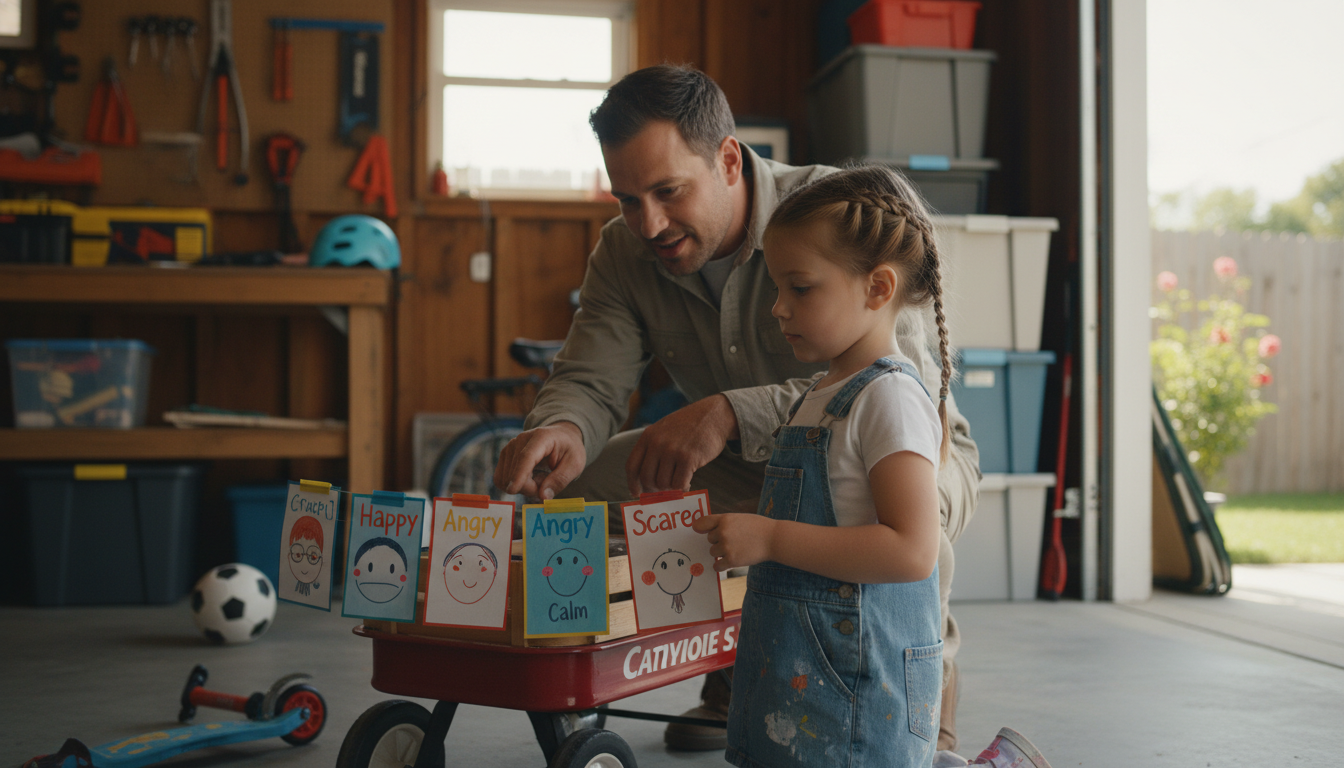
Start by making feelings feel “nameable” and safe. Kids learn emotions the same way they learn colors: through simple labels, real-life examples, and lots of repetition. Use everyday moments—spilled cereal, losing a game, a surprise visit—to point out what you notice and give it a word: “That looks like frustration,” “Your body seems worried,” or “You’re excited.” Keep it short, calm, and specific.
Begin with a few common emotions: happy, sad, mad, scared, and calm. Once your child can identify these, add more nuanced words like disappointed, nervous, embarrassed, proud, or lonely. A simple “feelings chart” or a quick daily check-in (“Which one matches your day?”) helps kids build vocabulary without pressure.
Kids often feel emotions before they can describe them. Help them notice the body clues: tight fists, hot cheeks, wiggly legs, a stomach “knot,” or tears. Try prompts like, “Where do you feel that in your body?” and “Is your heart beating fast or slow?” This teaches self-awareness and helps them catch big feelings earlier.
Make it clear that all feelings are allowed, but not all behaviors are. Say, “It’s okay to feel mad. It’s not okay to hit.” Then offer an alternative: “You can stomp your feet, squeeze a pillow, or ask for space.” This reduces shame while still setting firm boundaries.
Books, pretend play, and movie scenes are low-stakes ways to practice. Pause and ask, “What do you think they’re feeling? What might help?” Kids often talk more freely about a character than about themselves, and the skill transfers over time.
Pair labels with tools: breathe slowly, get a drink of water, take a break, ask for a hug, or use words to request help. For a step-by-step feelings checklist and child-friendly prompts, visit this guide to kids’ feelings and emotions.
Offer two choices and keep your voice low: “Do you want to squeeze a pillow or take five belly breaths?” A short reset routine—drink water, breathe, then talk—helps kids learn what to do when emotions feel too big.





Leave a comment