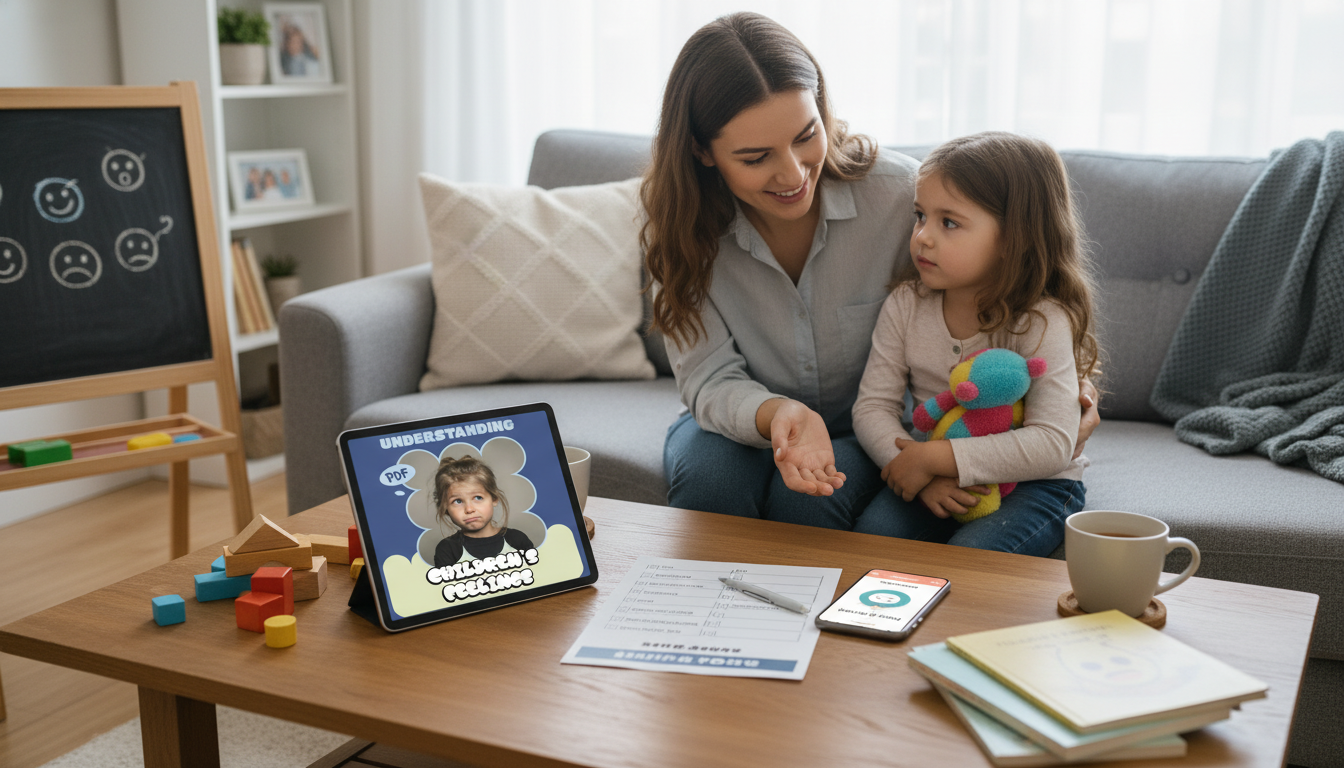
Children’s emotions often show up as behavior—tears, silence, anger, clinginess, or sudden silliness. A simple, repeatable checklist can help parents pause, identify what’s happening, and respond in a way that builds emotional awareness over time. The goal isn’t perfect calm; it’s steady connection, clear limits, and small skills practiced again and again.
For additional guidance and a ready-to-print routine, keep Understanding Children’s Feelings – Practical Checklist for Parents handy for quick reference during the moments that usually feel the hardest.
Emotional development changes fast, so the same “behavior” can mean different things depending on age and context.
| Signal | Possible feeling | Parent response to try |
|---|---|---|
| Yelling or hitting | Anger, frustration, feeling powerless | Name the feeling, set a firm boundary, offer a safe outlet (stomp, squeeze pillow) |
| Crying over small things | Overwhelm, fatigue, hunger, disappointment | Check basics (sleep/food), validate, offer a reset (water, quiet corner) |
| Clinginess | Anxiety, insecurity, transition stress | Predict the next step, offer connection (two-minute cuddle), practice brief separations |
| Shutting down / silence | Shame, fear of getting in trouble, overstimulation | Reduce questions, sit nearby, offer choices (“talk now or later?”) |
| Perfectionism | Fear of failure, pressure, low confidence | Praise effort, normalize mistakes, break tasks into smaller steps |
Use this routine as a “default path” when you can’t think clearly. Consistency matters more than saying the perfect sentence.
Take one slow breath, soften your voice, and lower your body posture (kneel or sit). Safety comes before solutions—kids borrow calm from the adult nervous system.
Describe what you see and hear without judging it: “Your fists are tight. Your voice is loud.” This keeps the door open and lowers defensiveness.
Offer 2–3 possibilities so your child can choose: “Are you mad, worried, or disappointed?” If they reject your guess, you still learned something: “Okay—help me understand.”
Validation is not permission. Try: “It makes sense to feel angry. It’s not okay to hit.” If needed, block unsafe behavior calmly and clearly.
Give choices that restore a sense of control: drink water, sit in a quiet spot, draw it, squeeze a pillow, ask for help, or take a short break. For some kids, holding something soft helps their body settle; a comfort item like the Cute Big-Eyes Meerkat Plush Toy – Soft Stuffed Animal Gift can become a “calm companion” used during resets or bedtime wind-down.
For more evidence-based parenting guidance and stress support, see resources from the CDC’s Positive Parenting Tips and the American Academy of Pediatrics on helping children handle stress.
AI can be useful as a planning helper—especially when you’re tired and your brain is blank—but it shouldn’t replace connection, supervision, or professional care when needed.
If you want a structured, print-friendly routine that also includes safe ways to use AI for wording and planning, Understanding Children’s Feelings – Practical Checklist for Parents can reduce the “what do I do now?” spiral during high-stress moments.
Pair it with a short weekly check-in: “What feeling was hardest this week? What helped even a little?” A low-cost printable can reduce decision fatigue and helps multiple adults use the same language across the home. If you want a simple, quick-start option, see Understanding Children’s Feelings – Practical Checklist for Parents.
Start with co-regulation: calm voice, physical safety, and predictable steps that help a child’s body settle. Then teach one small skill at a time (labeling feelings, breathing, making a simple choice) and return to repair conversations after conflicts so learning can stick.
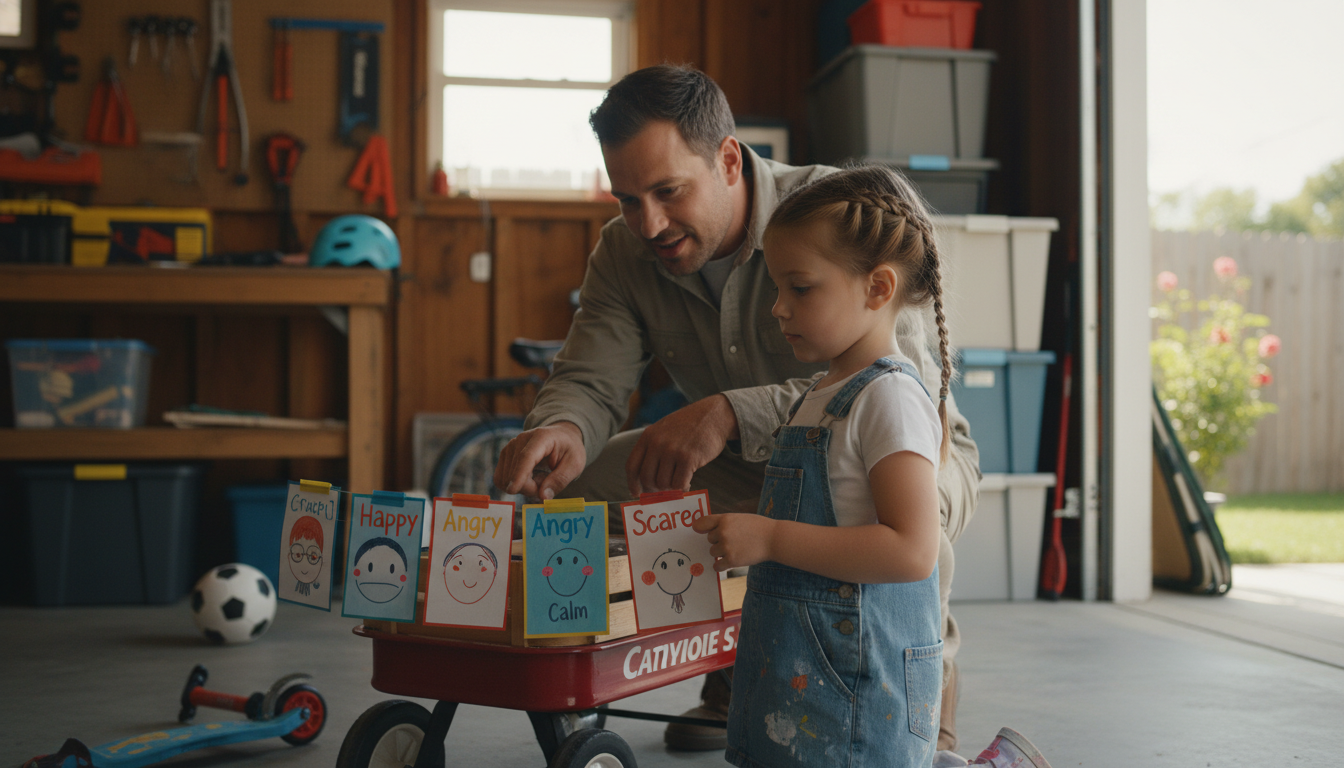
Use simple feeling words and connect them to body cues (“tight chest,” “hot face”) during calm moments. Practice short scripts like “I feel __ because __; I need __,” and expand vocabulary gradually without shaming or labeling the child as “bad.”





Leave a comment