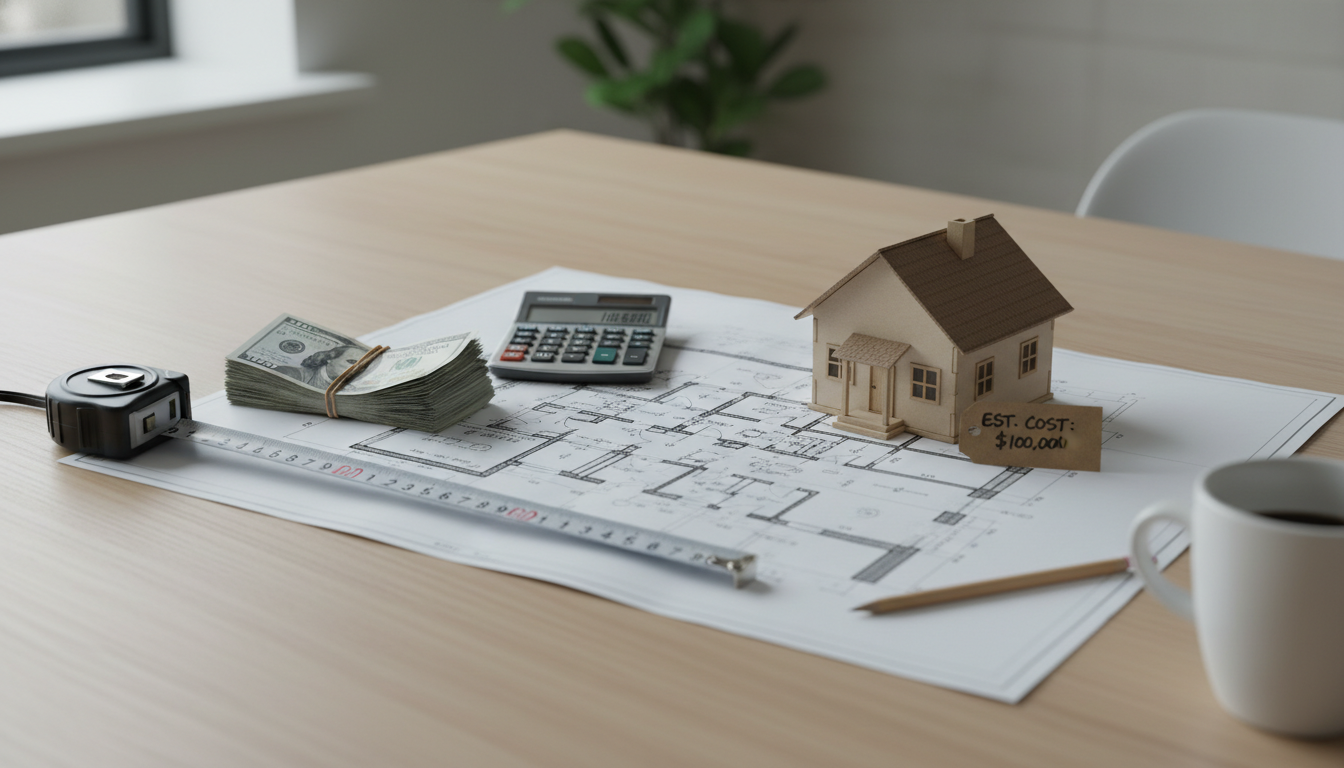
In most U.S. markets today, $100,000 usually supports a very small home: roughly 300–700 square feet if you’re paying typical contractor rates and building to standard code with basic finishes. In a low-cost rural area (and with a simple design), it can sometimes reach around 800–1,000 square feet, but that number drops quickly once you add site costs, utility hookups, permits, or higher-end choices.
The biggest swing factor is whether the budget includes land. Clearing, grading, driveway, septic/well, and bringing power to the site can consume $15,000–$50,000+ before the first wall goes up—especially on remote or challenging lots.
A compact rectangle with a simple roofline is far cheaper per square foot than a home with multiple bump-outs, valleys, dormers, or complex foundations. One story can be cost-effective for framing, but a small two-story footprint may reduce foundation and roof area, which can help when your lot and site costs are high.
“$100,000 house” can mean different things. If it includes appliances, flooring, cabinets, HVAC, and interior paint, the buildable square footage shrinks. If it’s a dried-in shell or a partially finished interior, you can go larger, but you’ll need additional funds (or time and DIY labor) to complete it.
Local labor rates, inspection requirements, and material pricing all matter. The same plan can cost substantially more in high-demand metro areas than in regions with lower labor and permit costs.
Focus on essentials first: fewer corners, standard window sizes, a modest kitchen, and one bathroom. Consider a smaller conditioned footprint paired with a porch or carport for extra usable space. If you’re trying to make the numbers work, breaking costs into categories and planning the timeline helps prevent surprise overruns. For a detailed approach to budgeting and tracking build expenses, see this home-building savings checklist, budget buckets, and timeline guide.
Simple, compact layouts—like a small rectangular cottage or basic ranch with a straightforward roof—tend to be the least expensive. Costs stay lower when you minimize corners, keep spans short, and choose standard finishes.






Leave a comment