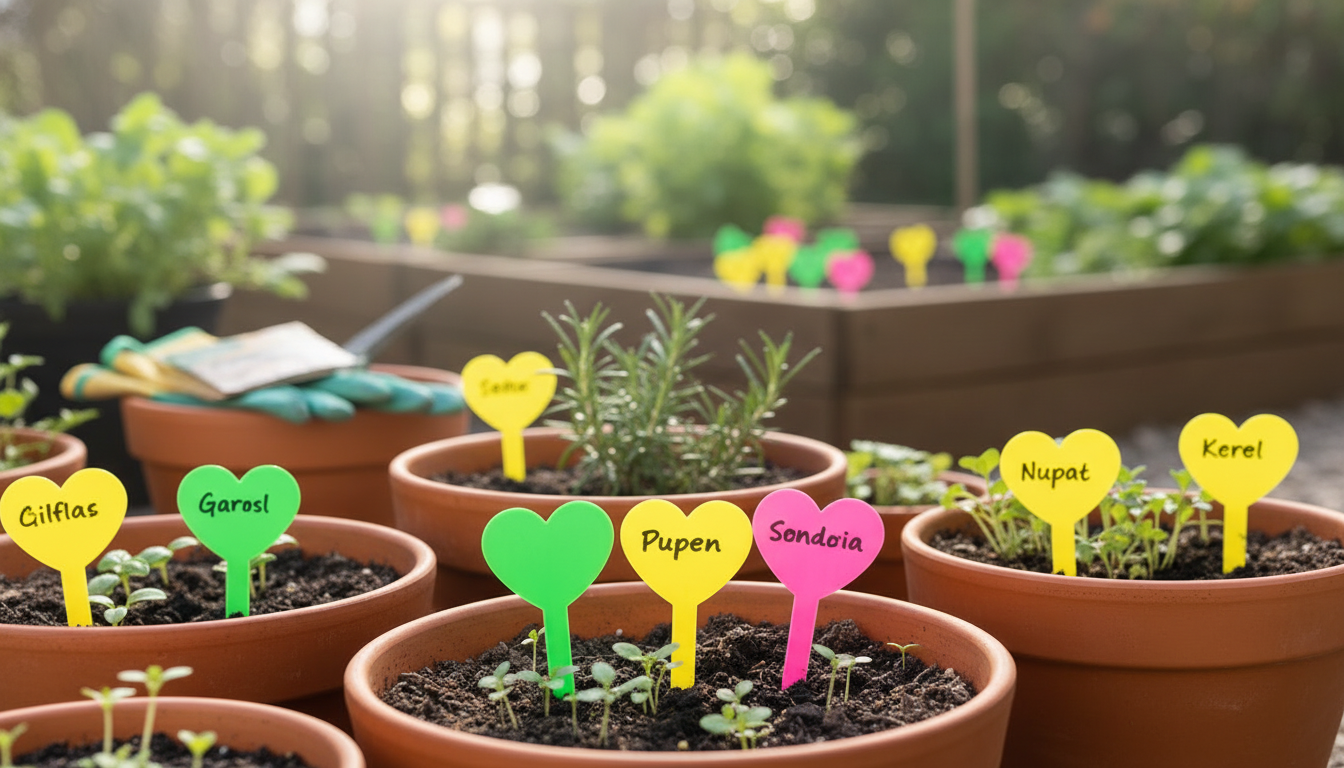
Keeping track of seedlings, cuttings, and look-alike herbs gets difficult fast—especially when multiple pots share the same shelf or bed. Mixed-color plant labels make identification simple at a glance while keeping care routines consistent, from watering schedules to light needs and transplant timing. With a generous pack size, you can label everything from seed-starting trays to patio containers without rationing tags or relying on memory.
What Mixed-Color Plant Labels Help With
Plant labels do more than prevent “mystery pots.” They turn a scattered collection of containers into a system you can manage day after day.
- Preventing mix-ups between similar sprouts (basil vs. oregano, pepper varieties, tomato cultivars)
- Tracking sowing dates, germination rates, and transplant timelines
- Separating plants by care needs using color-coding (sun vs. shade, weekly feed vs. no feed)
- Marking propagation batches (cuttings, divisions, and offsets) so each set is easy to monitor
- Reducing wasted time spent guessing what’s in each pot when rearranging shelves or moving plants outdoors
Key Features to Look For in Plant Labels
A good label should be easy to write on, easy to place, and easy to read later—when you actually need it.
- Writable surface that accepts common garden markers or permanent ink without smearing
- A stake shape that inserts easily but stays stable in potting mix and garden soil
- Enough space to write plant name plus a quick note (variety, date, location, or fertilizer reminders)
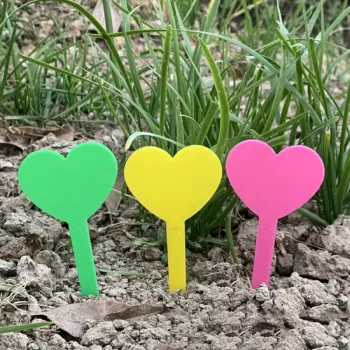
- Mixed colors for fast sorting and visual organization across many containers
- A practical count per pack so labeling can be consistent across the whole garden setup
If you’re starting seeds indoors, solid labeling habits help prevent mix-ups from day one. The University of Minnesota Extension offers a helpful overview of seed-starting best practices, including timing and setup considerations: Starting Seeds Indoors. For more general seed guidance, the Royal Horticultural Society’s growing-from-seed resource is also a strong reference.
Simple Color-Coding Systems That Work
Mixed colors make it easier to sort plants quickly—especially when you have multiple trays, a mix of indoor/outdoor containers, or frequent successions throughout the season.
- By plant type: one color for herbs, another for flowers, another for vegetables
- By care intensity: high-water plants vs. drought-tolerant plants
- By light: full sun, partial shade, indoor low-light
- By timeline: seedlings, recently transplanted, established plants
- By location: balcony, windowsill, patio containers, raised bed sections
Quick color-coding ideas for potted plants and garden beds
| Color group |
Suggested use |
What to write on the label |
| Group A |
Seed-starting trays |
Plant + sow date (e.g., “Tomato—3/12”) |
| Group B |
Cuttings/propagation |
Plant + batch note (e.g., “Pothos—water prop”) |
| Group C |
Full-sun containers |
Plant + placement (e.g., “Basil—south rail”) |
| Group D |
Shade/indirect light |
Plant + light note (e.g., “Fern—shade”) |
| Group E |
Feeding schedule |
Plant + frequency (e.g., “Rose—feed biweekly”) |
Best Ways to Write Labels So They Stay Readable
Even the best organization plan falls apart if the ink fades or smudges. A few small habits help labels stay legible through watering, sun exposure, and handling.
- Use waterproof or oil-based garden markers for outdoor pots exposed to rain and sun
- Let ink dry fully before inserting labels into damp soil to reduce smudging
- Write on a clean, dry surface; wipe off dust or moisture before marking
- Include a date or short code for varieties (e.g., “Jalapeño J1 / J2”) to compare performance
- For long seasons, consider rewriting faded labels mid-season rather than guessing later
A practical approach: write the plant name large on the first line, then keep notes short on a second line—like “3/12” for sow date or “AM sun” for placement. When labels are consistent, scanning your shelves becomes instant.
Where These Labels Fit Best
Mixed-color labels are versatile enough to use across your whole growing space, not just outdoor beds.
- Indoor houseplants: keep track of varieties, watering intervals, and last repotting date
- Nursery pots and seed trays: label each cell/row to prevent early-stage confusion
- Outdoor containers: organize patio vegetables, pollinator flowers, and mixed planters
- Raised beds: mark rows, successions, and different cultivars in the same bed
- Community gardens: clearly identify plots and plantings to avoid accidental weeding or harvesting
Everyday Uses Beyond Plant Names
Once labels are within reach, they often become a quick “garden notebook” right in the soil.
- Pest and treatment tracking (e.g., “Neem—5/20” or “Aphids spotted—monitor”)
- Watering reminders for thirsty plants during heat waves
- Rotation notes for edible gardens (what was planted where last season)
- Gift plants: add care notes for the recipient (light level, watering frequency)
- Experiment tracking: compare soil mixes or fertilizer routines between identical plants
Care, Reuse, and Storage Tips
Shop In-Stock Picks
FAQ
What marker works best for plant labels outdoors?
A waterproof garden marker, oil-based paint pen, or a quality permanent marker tends to hold up best outdoors. Let the ink dry completely before placing the label into damp soil, and expect some fading over time in strong sun.
How do you label seedlings without mixing varieties?
Label immediately at sowing, and add a sow date plus a short variety code so similar seedlings don’t get swapped. Use consistent placement (like the same corner of each cell or pot) and assign color groups per tray to keep batches visually separated.
Can plant labels be reused for the next season?
Yes—wash labels with mild soap and water, dry them fully, then rewrite with a waterproof marker. Store them sorted by color or type, and check legibility before replanting so nothing starts the season as a guess.
Recommended for you






Leave a comment