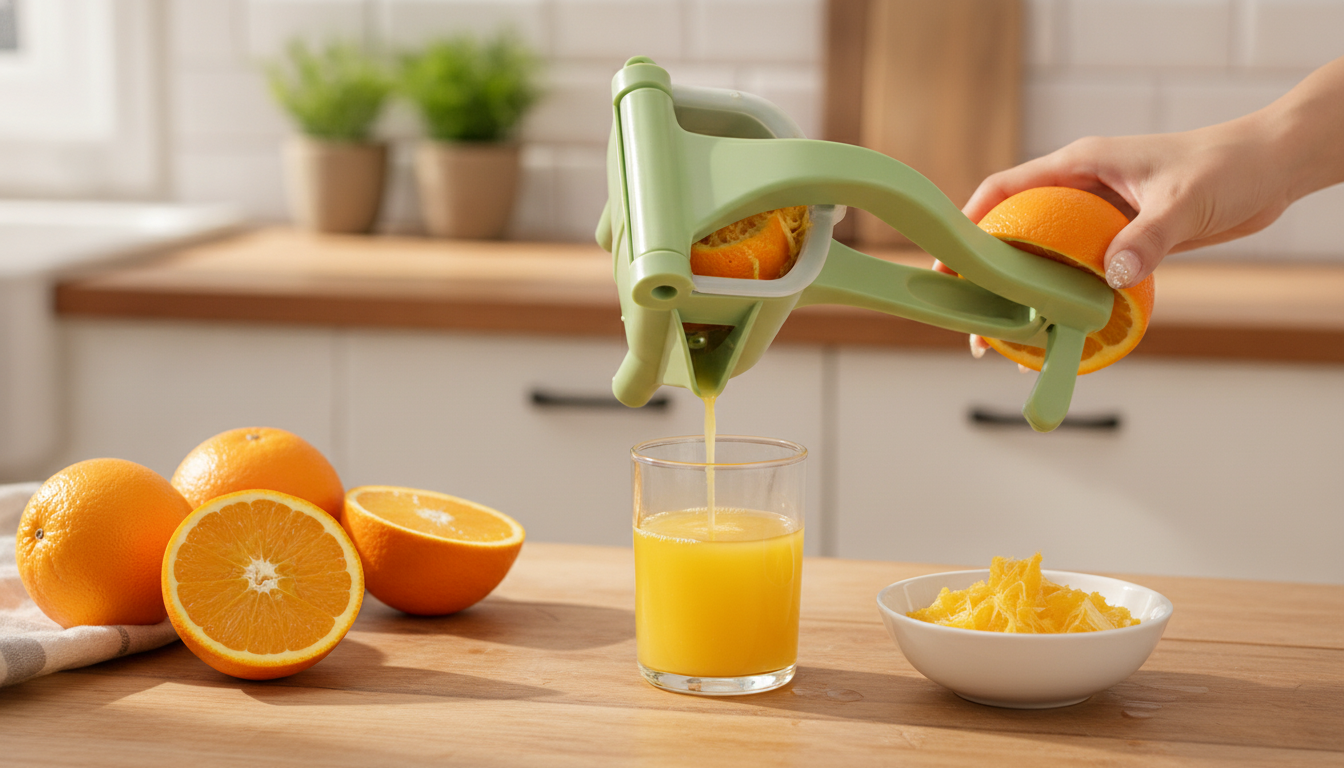
Fresh juice doesn’t have to mean extra pulp in the glass or a sticky cleanup. A hand juicer with a built-in pomace separator helps strain solids as you press, making it easier to pour smoother juice for drinks, dressings, and quick kitchen prep—without pulling out bulky appliances. For anyone who reaches for lemons and limes often, this is a simple way to get brighter flavor with less grit and fewer dishes.
“Pomace” is the leftover pulp, membranes, and seeds after juicing. A pomace separator is the built-in barrier that keeps much of that material out of your finished juice while still letting liquid flow through.
For nutrition details on citrus (like vitamin C content) and other ingredients you might juice or mix with, USDA FoodData Central is a reliable reference. And for safe handling when prepping fresh produce, the FDA’s kitchen food safety tips are a helpful refresher.
A pomace-separating hand juicer shines in the everyday moments where you want fresh juice now, not an appliance, attachments, and a sink full of parts later.
It’s also handy for “finish” moments—like squeezing a bit of lemon over roasted veggies or brightening up a soup bowl—because you can juice directly into a spoon, ramekin, or measuring cup and keep seeds out without a second step.
Even a great separator works best with a few small technique tweaks. These steps help you get a cleaner pour and better yield.
If you’re after extra-smooth juice for cocktails or delicate glazes, pressing in two stages (a gentle first press, brief pause, then a firmer finish) often reduces the amount of fine pulp that gets pushed through.
Not all hand juicers strain the same way. A few details can make the difference between a clean pour and a frustrating drip.
| Need | What to prioritize | Helpful tip |
|---|---|---|
| Less pulp in the glass | Finer pomace separator | If juice drains too slowly, use slower presses rather than forcing |
| Fast cleanup | Simple shape, easy-rinse parts | Rinse immediately; pulp is hardest to remove once dry |
| Everyday citrus use | Comfortable grip and steady press | Warm the fruit slightly or roll it to release more juice |
| Cocktails and baking | Good pour edge/spout | Juice directly into a measuring spoon/cup to avoid spills |
A separator does a lot of the “mess control,” but maintenance keeps it performing like new—especially if pulp likes to cling to small openings.
If the goal is quick, small-batch juicing with less pulp and fewer extra tools, the Multifunction Hand Juicer with Pomace Separator is built for the job. It’s a practical match for everyday lemon/lime use, quick recipes, and drink prep—especially when a countertop juicer would be more hassle than help. It also stays compact for easy drawer storage, weeknight cooking, travel, or a camping kitchen setup.
For anyone trying to streamline meal prep and keep small routines consistent (including stocking citrus, batching dressings, or planning quick breakfasts), the digital guide Get More Done: The Friendly Guide to Mastering Productivity can pair well with a “less friction in the kitchen” approach.
It’s designed to catch seeds and larger pulp while letting juice flow through, so the pour is typically cleaner. Some fine pulp can still pass depending on the fruit and how hard/fast you press; pressing more slowly and pausing to let juice drain can improve clarity.
Lemons, limes, and small oranges are usually the easiest and most efficient. Very large citrus or very fibrous fruits can be less convenient by hand and may be better handled with a different tool if you’re making big batches.
Rinse immediately under warm water so pulp doesn’t dry and stick. If anything lodges in the separator, use a soft brush or sponge and avoid abrasive scrubbers that can make future cleanup harder.





Leave a comment