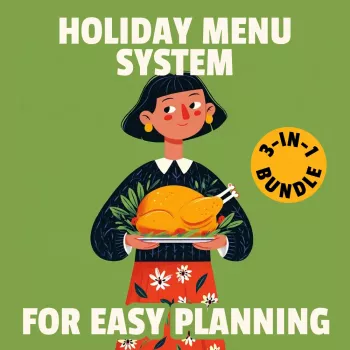
Holiday hosting can feel like juggling recipes, timing, shopping, and guests all at once. A structured menu system turns the chaos into a clear plan—so the meal feels thoughtful, the kitchen stays calmer, and everyone eats well whether it’s a full feast, an intimate dinner, or a bring-a-dish potluck.
A holiday menu system is less about “more planning” and more about removing repeated decisions. Instead of reinventing the wheel for every gathering, it gives you one reliable framework you can reuse all season long.
It also supports safer, smoother serving—especially when food sits out for longer stretches. For party food safety basics, consult the USDA Food Safety and Inspection Service holiday guidance and the CDC’s food safety at home tips.
Different gatherings need different kinds of structure. The trick is using a consistent workflow while tailoring the menu to the occasion’s size, serving style, and coordination needs.
| Occasion | Best fit | Planning focus | Typical challenge solved |
|---|---|---|---|
| Big holiday gathering | Feasting guide | Courses + quantities | Too many dishes finishing at once |
| Small family celebration | Dinner guide | Tight, elegant menu | Overcooking or overspending for a small group |
| Friendsgiving or office party | Potluck guide | Coordination + assignments | Duplicate dishes and missing essentials |
A calm holiday meal starts with choosing the right “anchor” and letting everything else support it. This workflow keeps decisions in order, so you’re not trying to solve timing, flavors, and shopping all at the same moment.
Balance is what makes a holiday spread feel “complete” without requiring a dozen dishes. A simple template keeps you from overloading the menu with heavy casseroles—or forgetting anything fresh and crunchy.
For hosts who want a repeatable structure across multiple events, the Holiday Menu System for Easy Planning: 3-in-1 Bundle – Feasting, Dinner, & Potluck Guides is built around the exact rhythm that makes holiday meals feel easier: balance the menu, map the prep, and shop once.
If your biggest challenge is staying organized during a busy season overall, pairing your hosting plan with a simple productivity system can help keep shopping, prep, and commitments in one place. Consider Get More Done: The Friendly Guide to Mastering Productivity for a straightforward approach to time and energy planning.
| Item | Format | Includes | Best for |
|---|---|---|---|
| Holiday Menu System for Easy Planning: 3-in-1 Bundle – Feasting, Dinner, & Potluck Guides | Digital guides bundle | Feasting guide, Dinner guide, Potluck guide | Hosts planning multiple holiday meals and potlucks |
| Get More Done: The Friendly Guide to Mastering Productivity | Digital eBook | Simple systems for time & energy management | Anyone juggling holiday planning alongside work and family commitments |
For a larger feast, start 1–2 weeks ahead so you can finalize recipes, confirm equipment, and shop without rushing. For a smaller dinner, 3–7 days is usually enough. For potlucks, coordinate early, lock the menu before you shop, and confirm contributions about 48 hours before the event.
A dependable framework is one main plus 3–5 supporting dishes and dessert, adjusted for guest count and whether you’re serving buffet-style or seated. Prioritize variety (fresh, crunchy, bright, and warm) over sheer volume. Dietary needs are easier to accommodate when each dish has a clear role.
Assign categories with portion sizes (for example, “warm side that serves 8”) and track who’s bringing what in one shared list. Plan a simple host “core menu” (main plus 1–2 sides) so the table still works even if someone cancels. Keep a backup list of store-bought swaps that match your categories.




Leave a comment