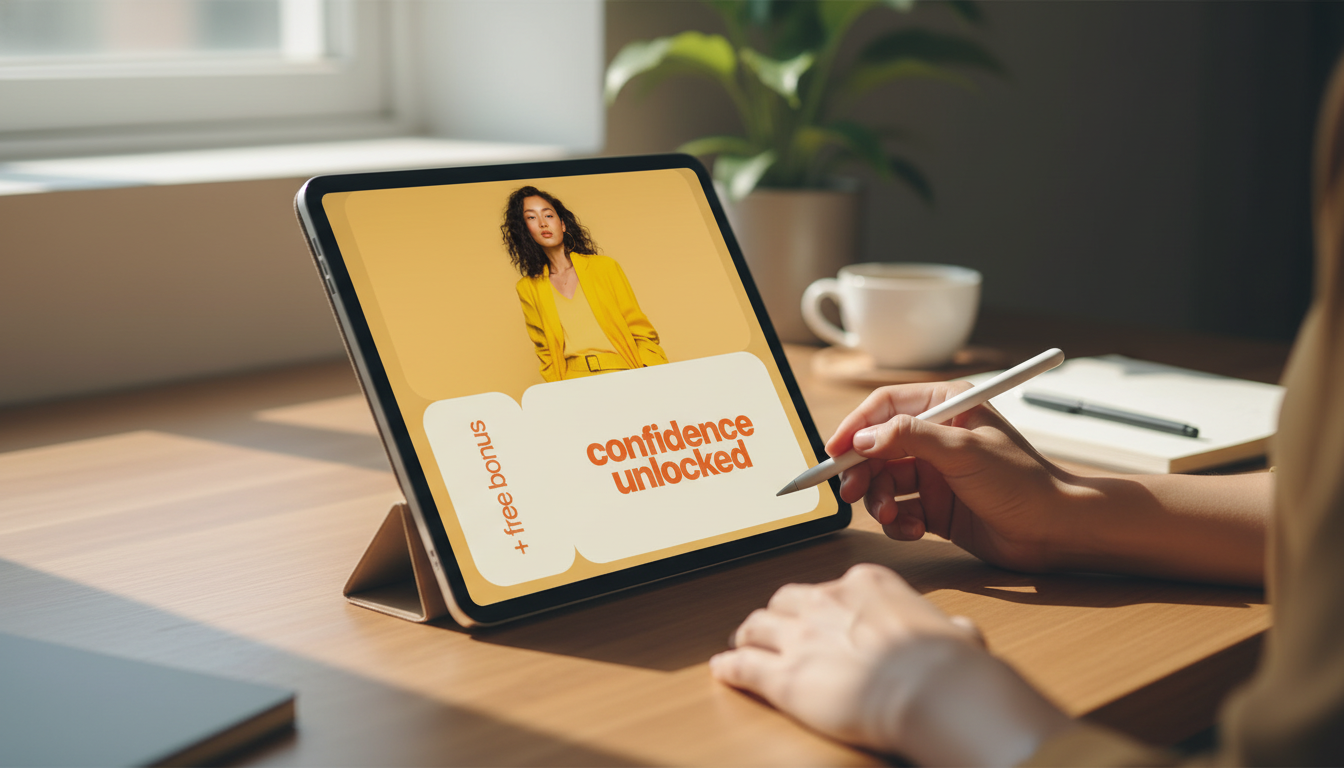
Social confidence is a skill set that can be learned—one small, repeatable step at a time. Confidence Unlocked: Your Easy Guide to Social Brilliance – Digital Download is designed to help reduce fear in social situations, strengthen communication habits, and build steady, real-world confidence through simple practice and reflection. Instead of chasing a “perfect personality,” it focuses on workable behaviors you can repeat in everyday moments—so progress feels measurable, not mysterious.
Social confidence doesn’t mean never feeling nervous. It often shows up as steadiness in the middle of discomfort—doing the thing while your brain is still trying to talk you out of it. In real life, social confidence can look like:
If social settings feel heavy or high-stakes, there’s usually a pattern underneath it. Many people aren’t “bad at people”—they’re stuck in a loop that makes normal interaction feel like a performance review.
For helpful background on how anxiety can affect thoughts and body reactions, see the American Psychological Association overview on anxiety. If your fear feels intense or persistent, the National Institute of Mental Health resource on social anxiety disorder can clarify when it may be more than shyness.
The goal isn’t to “be fearless.” The goal is to build reliable skills and a simple routine that makes social life feel more navigable. This digital download supports practice in areas like:
If you want a structured, low-pressure way to start, Confidence Unlocked is built to be used in short sessions—then applied immediately in real interactions.
Confidence builds fastest when the steps are small enough that you actually do them. Here’s a gentle, practical week you can repeat (or stretch over two weeks if needed):
| Situation | What to say | Why it works |
|---|---|---|
| Starting a chat | “Hey—how’s your day going?” | Open-ended and easy to answer without forcing a big topic. |
| Keeping it going | “What’s been taking up most of your time lately?” | Invites a story and creates natural follow-ups. |
| Buying time | “That’s a good question—let me think for a second.” | Normalizes pauses so silence doesn’t feel like failure. |
| Exiting politely | “I’m going to say hi to a few people, but it was great talking with you.” | Ends cleanly without excuses or abruptness. |
| After an awkward moment | “Anyway—what were you saying about…?” | Redirects attention forward instead of staying stuck. |
Some skills give a bigger confidence return because they lower pressure immediately while making conversations feel smoother for both people.
Noticeable gains can start within days when practice is consistent, especially with small daily challenges. Bigger, more stable changes usually build over weeks as repetition reduces avoidance and increases comfort.
It can support skill-building and coping strategies for everyday nervousness and mild-to-moderate social fear. If symptoms are severe, persistent, or limiting your ability to function, professional support may be a better next step.
Awkward moments are normal and don’t mean you’re failing. Pause, breathe, and redirect with a simple question or a topic bridge, then focus on repeating small behaviors that you can reliably do again.






Leave a comment