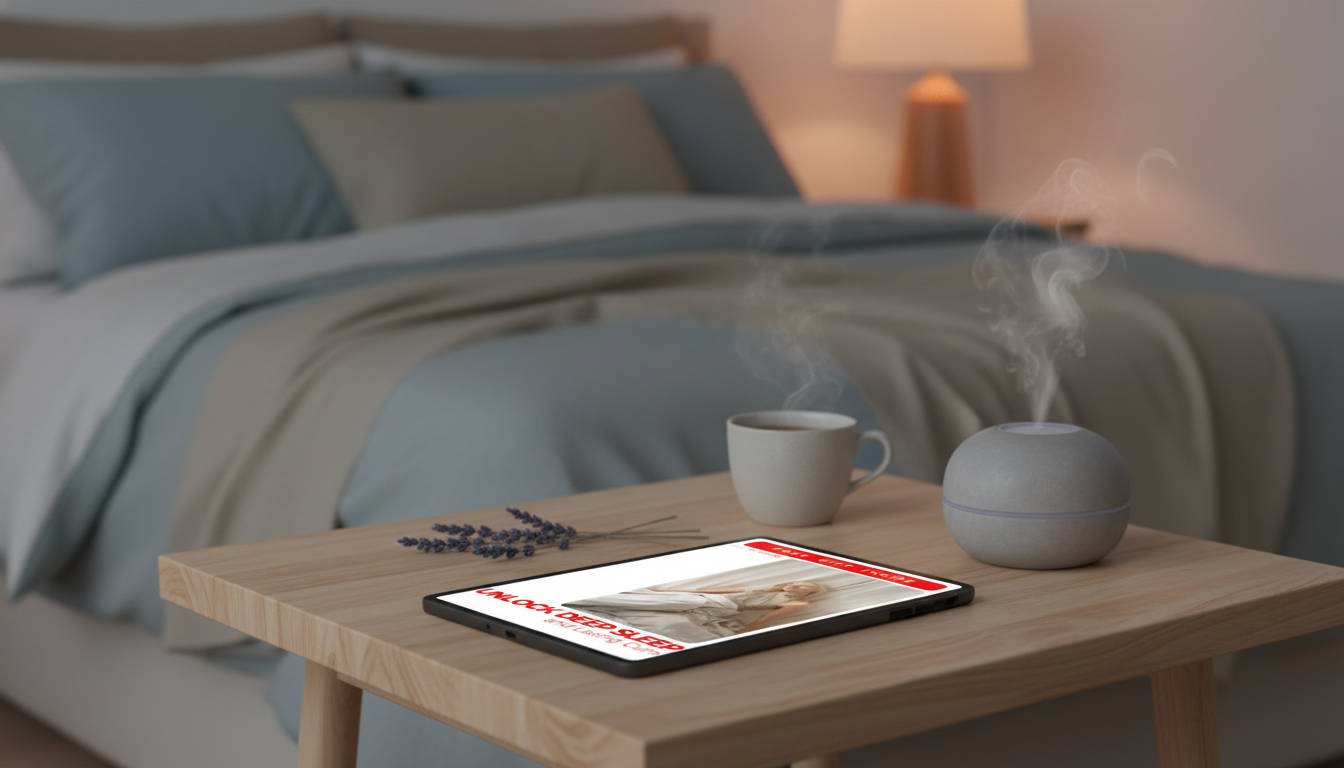
Deep sleep becomes elusive when stress keeps the body on alert. A calmer night doesn’t require complicated gadgets or a complete lifestyle overhaul—it usually requires a repeatable “downshift” that tells your nervous system it’s safe to power down. Below is a simple nighttime reset to reduce racing thoughts, lower physical tension, and support longer, more restorative sleep.
Deep sleep (often called slow-wave sleep) is one of the most physically restorative parts of the night. It supports tissue repair, immune function, memory consolidation, and emotional steadiness. When it’s consistently short, even a “full” night can feel thin and unhelpful.
Chronic stress disrupts sleep stages by keeping the brain and body in a higher-arousal state. That can lead to fragmented cycles, more time in lighter sleep, and more frequent awakenings—especially in the second half of the night.
Common signs deep sleep is suffering include waking unrefreshed, afternoon crashes, irritability, and brain fog that feels out of proportion to your bedtime.
Deep sleep often drops when your system is stuck in “on” mode. Several factors can layer together:
For foundational sleep guidance and sleep-stage education, the American Academy of Sleep Medicine’s Sleep Education resources are a helpful starting point. If anxiety is a major driver, the National Institute of Mental Health provides clear overviews of anxiety disorders and treatment options.
The goal isn’t to force sleep—it’s to make your body’s default setting quieter. This works best when the steps happen in the same order each night, so your brain learns the sequence and starts powering down automatically.
Dim lights, reduce input, and keep movements slow and deliberate. This “low gear” behavior is a direct message to your nervous system that the day is over.
Use structure so you don’t negotiate with yourself at midnight. A short brain-dump, gentle breath pacing, and a guided relaxation cue reduce rumination and lower arousal.
Make the bedroom an environment that prevents awakenings: cooler temperature, darker room, and fewer disruptions. Pair that with a consistent wake time to anchor your rhythm.
| Time | Step | What to do | Why it helps |
|---|---|---|---|
| T-30 | Light & screen shift | Lower lights; stop scrolling; set phone outside reach or on night mode | Reduces alerting cues and protects melatonin timing |
| T-25 | One-page brain dump | Write worries, to-dos, and one next action for tomorrow | Moves rumination into a plan so the brain can disengage |
| T-15 | Breath pacing | Try 4–6 breaths/min for 5 minutes (slow, comfortable exhale) | Encourages parasympathetic “rest and digest” signaling |
| T-10 | Body scan | Progressively relax jaw, shoulders, belly, hips, legs | Releases muscle tension that keeps sleep light |
| T-5 | Sleep cue | Same short phrase or ritual: water sip, gratitude line, lights out | Builds a conditioned association with sleep onset |
“Instant sleep” is a high-pressure goal that often backfires. A better target is rapid downshifting: lowering stimulation, increasing comfort, and repeating cues that signal safety.
If you suspect persistent sleep deprivation, the National Heart, Lung, and Blood Institute offers practical education on health impacts and sleep basics.
If you want a repeatable plan you can use immediately, consider Unlock Deep Sleep and Lasting Calm | Stress Relief Sleep Guide (Digital eBook). It’s designed for racing thoughts, tension, difficulty winding down, and frequent awakenings—so the routine becomes automatic over time.
For an extra comfort cue, some people sleep better with a consistent “wind-down object” that signals safety and softness. A simple option is the Cute Big-Eyes Meerkat Plush Toy – Soft Stuffed Animal Gift, which can support a calming bedtime ritual without adding screens or stimulation.
Most often it’s a combination of stress-driven hyperarousal, circadian misalignment from late light or inconsistent schedules, and sleep disruptors like late caffeine, alcohol, heavy meals, or a too-warm/noisy room. If snoring, gasping, restless legs, or persistent insomnia are present, a clinician can help rule out treatable conditions such as sleep apnea or other health contributors.
Deep sleep can’t be forced on command, but you can downshift quickly by dimming lights, removing stimulation, pacing the breath (around 4–6 breaths per minute), and doing a brief body scan to release tension. If you’re wide awake after about 20 minutes, get up for a low-light calming activity and return only when drowsy to retrain your brain to associate bed with sleep.






Leave a comment