Shrink Happens: A Fabric Survival Checklist for Wash Day
A few degrees too hot, a little too much agitation, or one surprise trip through the dryer can turn a favorite piece into a “before” photo. This checklist breaks down which fabrics are most likely to shrink, why it happens, and the simple habits that help clothes keep their original fit.
Why fabrics shrink
Shrinkage isn’t random—most of the time it’s a predictable reaction to heat, motion, and moisture interacting with fiber structure.
- Heat relaxes and re-sets fibers: Natural fibers can contract when exposed to hot water or high dryer temperatures.
- Agitation tightens structure: Heavy wash cycles and friction can pull fibers closer together, especially in knits.
- Moisture changes the fiber: Some materials swell when wet and then contract as they dry, creating a smaller finished size.
- Manufacturing matters: “Pre-shrunk” and heat-set fabrics are more stable, while untreated fabrics may shrink more on the first few washes.
Care labels help, but they’re still general guidance. For the rules behind labeling, see the Federal Trade Commission’s care labeling requirements. For day-to-day fabric care basics, the American Cleaning Institute is a solid reference.
High-risk fabrics: what’s most likely to shrink
If a closet staple has ever come out shorter, tighter, or oddly boxy, chances are it was one of these high-risk materials.
- Cotton (especially 100% cotton): Common first-wash shrinkage; knit tees and sweatshirts can tighten noticeably.
- Wool and cashmere: Heat + agitation can cause felting and dramatic size reduction; often irreversible. (For best practices, check International Wool Textile Organisation guidance.)
- Rayon/viscose: Prone to shrinkage and distortion; can lose length or shape when wet.
- Linen: May shrink, mostly on the first wash; tends to relax with wear but can tighten again after laundering.
- Silk: Less likely to shrink than wool, but heat and rough washing can distort the weave and sizing.
Shrink risk and safer settings by fabric
| Fabric |
Shrink risk |
Safer wash |
Safer dry |
| Cotton (100%) |
Medium–High |
Cold or warm, gentle; turn inside out |
Low heat or air dry; remove slightly damp |
| Wool / Cashmere |
High |
Cold, wool cycle or hand wash; minimal agitation |
Flat dry; never hot tumble |
| Rayon / Viscose |
High |
Cold, gentle; use a mesh bag if delicate |
Air dry or very low; reshape while damp |
| Linen |
Medium |
Cold or warm; gentle if loosely woven |
Low heat or line dry; press while slightly damp |
| Polyester / Nylon |
Low |
Cold or warm; normal cycle usually fine |
Low to medium; avoid very high heat to prevent warping |
| Denim (cotton-heavy) |
Medium |
Cold; wash less often; inside out |
Air dry or low; avoid over-drying |
Lower-risk fabrics (and the exceptions that still shrink)
Some fabrics are naturally more stable, but “low risk” doesn’t mean “no risk,” especially when heat enters the picture.
- Polyester and nylon: Generally stable, but high heat can cause warping, puckering, or a “tightened” feel in some blends.
- Spandex/elastane blends: The elastic component can degrade with high heat; garments may lose recovery even if they don’t shrink much.
- Acrylic: Usually resists shrinkage, but hot drying can change texture and cause misshaping.
- Blends behave like their weakest link: Cotton-poly blends shrink less than 100% cotton, while wool blends can still felt if mishandled.
- Construction matters: Knits, ribbing, and loosely woven fabrics often change size more than tightly woven fabrics.
The Wash-Day Survival Checklist
These steps are designed for real laundry rooms—busy households, shared dorm machines, and the “I only have 40 minutes” cycle of life.
- Read the care label before the first wash: Note the max temperature, drying method, and ironing guidance.
- Default to cold water for everyday loads: Increase temperature only for hygiene needs and compatible fabrics.
- Choose gentle cycles for knits, rayon, wool, and anything drapey: Less friction means fewer surprises.
- Use a mesh bag for delicate knits and rayon: It reduces stretching and surface abrasion.
- Avoid overloading: Packed drums increase friction and uneven rinsing, raising the odds of distortion.
- Skip high-heat drying when fit matters: Low heat or air dry prevents most sudden shrink moments.
- Remove items promptly and reshape: Smooth seams, align hems, and lay flat or hang correctly while slightly damp.
Drying and finishing habits that prevent the “one size smaller” result
When shrinkage happens anyway: what can (and can’t) be fixed
Printable help for laundry rooms and dorms
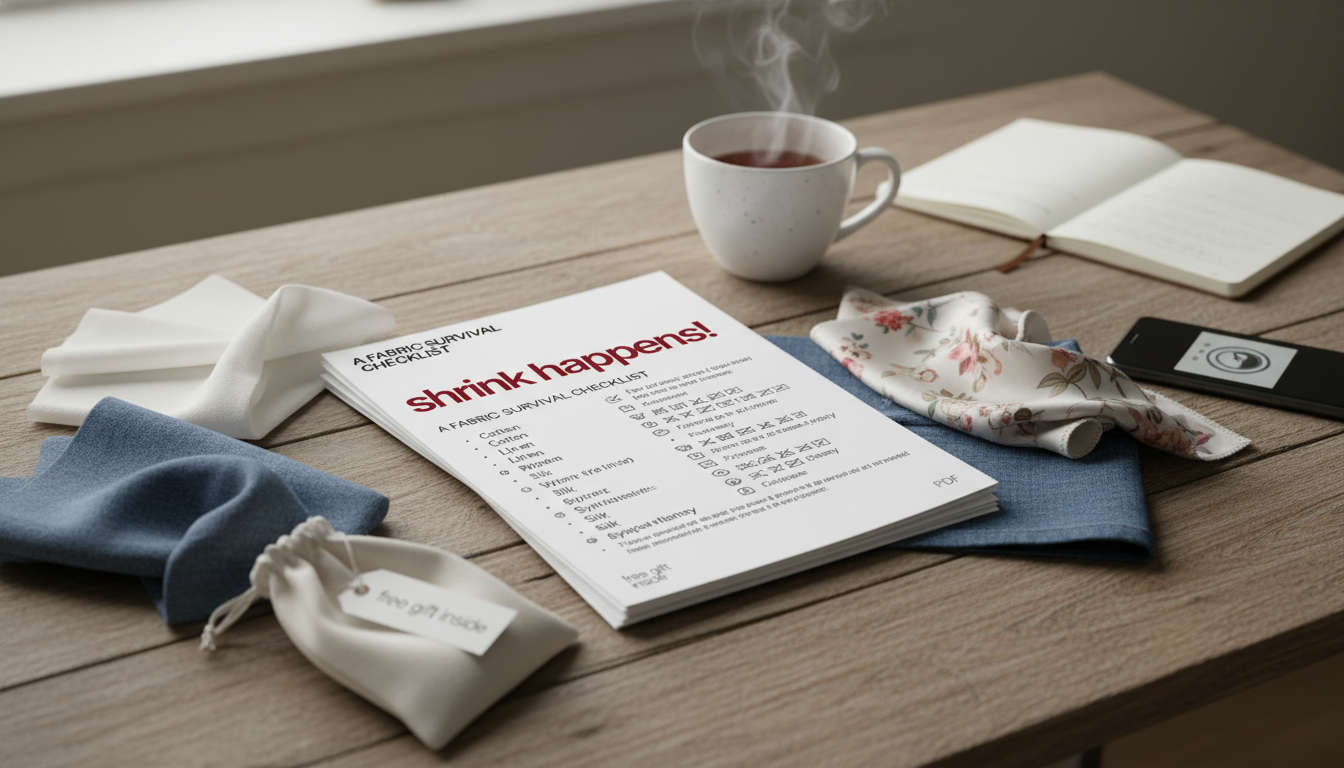
If you want a ready-to-use reference you can keep on your phone or print for the laundry area, see Shrink Happens! A Fabric Survival Checklist (digital download).
For shared laundry days or trips to the laundromat, a dedicated carryall also helps keep “wash,” “dry,” and “already clean” items separate. Consider Tommy Hilfiger Men’s Black Handbag with Shoulder Strap as a grab-and-go option for essentials like detergent pods, mesh bags, and stain remover.
FAQ
What fabrics shrink the most in the wash?
Wool and cashmere shrink the most when heat and agitation trigger felting, and the size loss is often permanent. Rayon/viscose is also high risk because it can shrink and distort, while 100% cotton commonly shrinks on the first wash—especially knits like tees and sweatshirts.
Does cold water prevent shrinking completely?
Cold water lowers the risk, but it doesn’t eliminate it. Agitation, fabric construction (like knits), and especially dryer heat can still cause noticeable shrinkage, so low-heat drying or air drying is the safer finish for high-risk items.
Can shrunken clothes be unshrunk?
Some cotton and cotton blends can relax with a gentle lukewarm soak (often with conditioner) followed by careful reshaping and flat air drying. Rayon results vary and may not fully recover, and felted wool is usually not reversible once the fibers lock together.
Recommended for you






Leave a comment