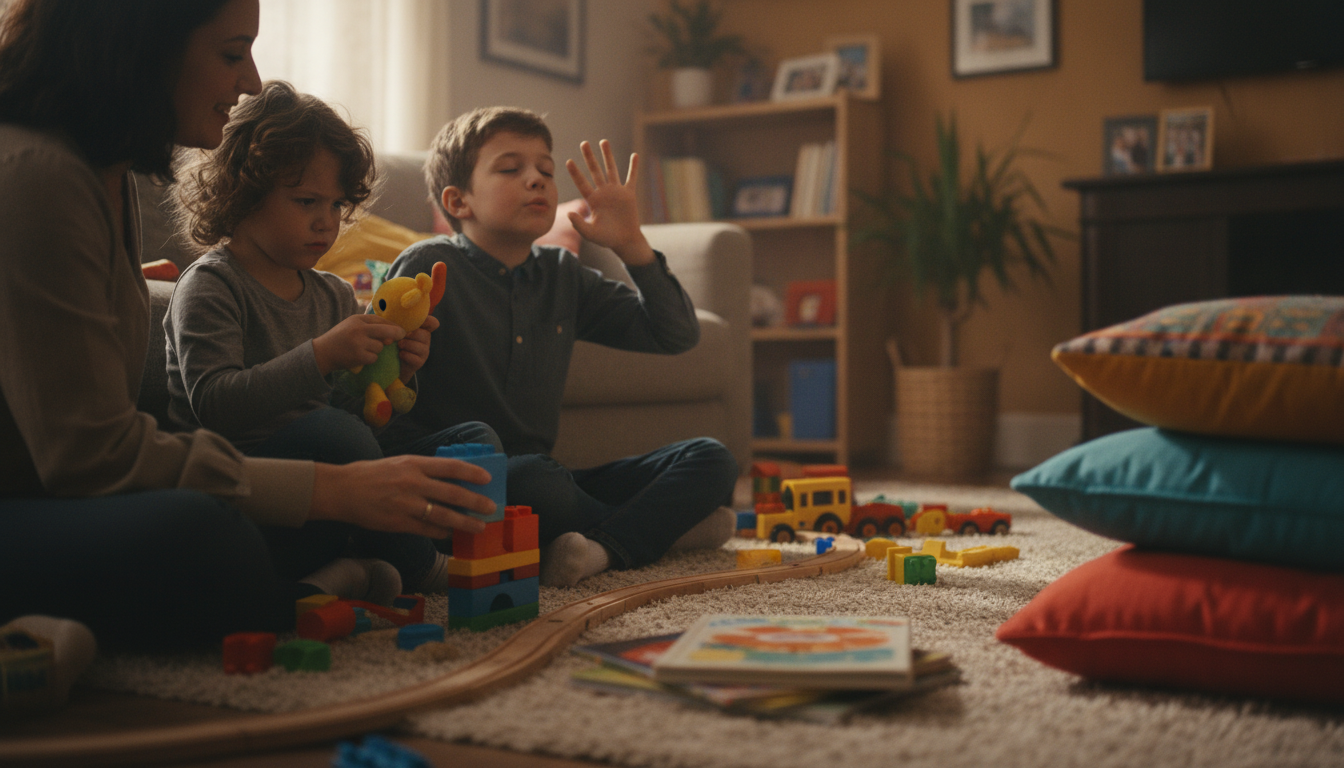
Basic emotional regulation is the ability to notice a feeling, name it, and choose a helpful response instead of reacting on impulse. It doesn’t mean “staying calm all the time.” It means having a few reliable skills that help the brain and body move from overwhelmed to steady—especially during stress, disappointment, anger, or anxiety.
At its core, emotional regulation has three simple parts:
This starts with body and emotion awareness: tight shoulders, a racing heart, tears, clenched fists, or a “hot” face can be early clues. Being able to say “I’m frustrated” or “I’m nervous” reduces confusion and helps the next step come faster.
A short pause creates space between the feeling and the action. Kid-friendly resets include slow breathing, counting, taking a sip of water, moving to a quieter spot, or using a comfort item. These tools help shift the body out of “fight-or-flight” so thinking skills can come back online.
Once the intensity drops, it’s easier to pick what to do next: ask for help, use words, take a break, problem-solve, or try again. For kids, adults often “co-regulate” first—staying calm, offering structure, and modeling language—until the child can do more independently.
Emotional regulation is a learnable skill, and practice during calm moments matters just as much as support during meltdowns. For practical, kid-focused tools (like calming strategies, routines, and simple scripts), see this guide to emotional regulation tips for kids.
For Basic Emotional Regulation: 3 Simple Steps for Kids, the best answer depends on fit, material, care instructions, and how the product will be used day to day.
Try “name the feeling,” take 5 slow breaths, and use a short break in a quiet spot. Visual cues (like a calm-down chart) and consistent routines also make it easier for kids to reset and rejoin.






Leave a comment